A Small Entryway That Handles Coats, Bags and Real Life
The entrance to a home collects the things that arrive with you: coats, bags, shoes, keys and the occasional parcel.
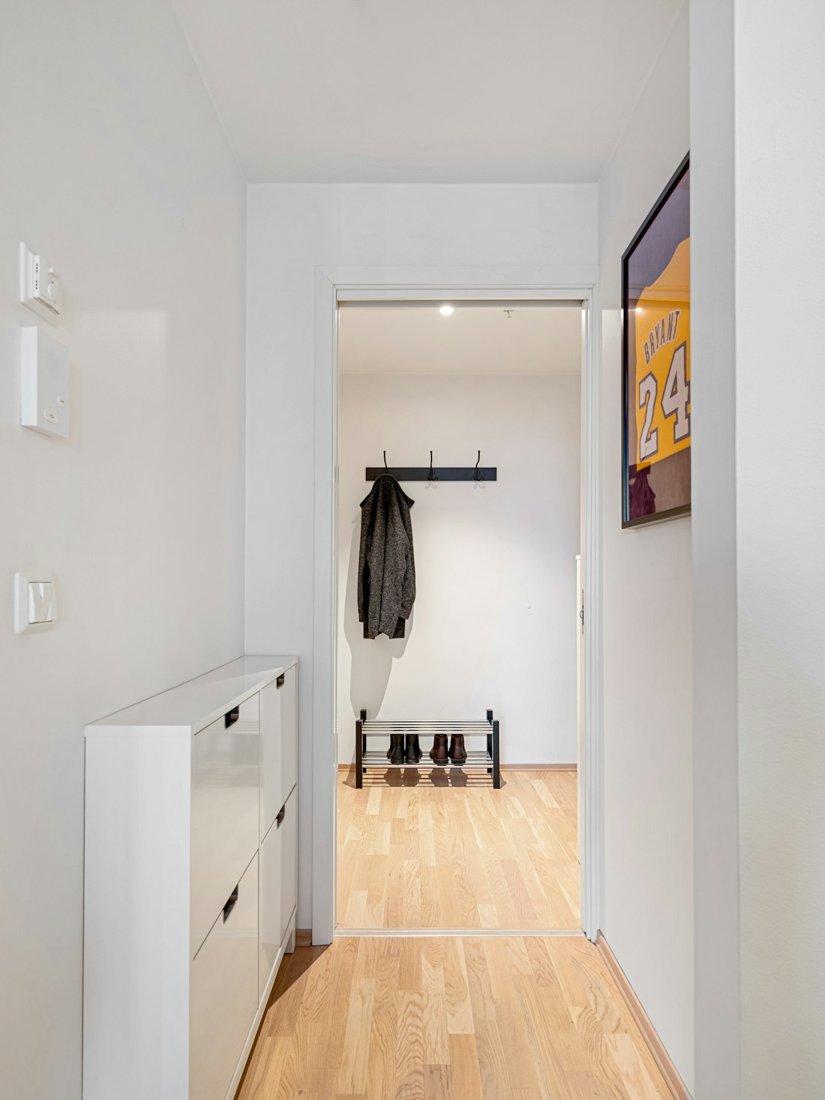
The entrance to a home collects the things that arrive with you: coats, bags, shoes, keys and the occasional parcel. Making it attractive begins with giving those objects realistic places to land. A small hallway does not need a console table if that table narrows the route. Start with movement and the items used most often, then choose storage that makes leaving and returning easier on ordinary weekdays.
Keep the route clear before adding furniture
Measure the narrowest point, including doors when open and any radiator or other fixed feature. Check how people move through the entrance carrying shopping or assisting children. A shallow shelf may work where a full table does not, while an empty wall can be more useful than a crowded display. Keep exits and access clear. If fitting hooks or shelving, check suitable fixings for the wall and follow installation instructions; get appropriate help when needed. The usable hallway is the space left after furniture is installed, not simply the measurements of a promising product listing.
Give everyday objects one dependable home
Choose a place for keys, a work pass and the bag you use most frequently. It should be close to the point of arrival and easy to use with one hand. A small dish, hook or existing drawer can be enough. Avoid several competing landing zones, which make objects harder to find. Keep sensitive documents and valuables appropriately stored rather than displaying them for convenience. Test the setup for a week and notice where things naturally accumulate. That pattern gives a better clue to placement than symmetry or a photograph of somebody else’s carefully edited entrance.
Separate current shoes from the full collection
An entryway usually needs to handle the shoes in regular rotation, not every pair in the household. Choose storage allowing suitable drying and easy cleaning, and follow care guidance for wet footwear. Keep a practical mat where it does not create a trip hazard or interfere with the door. A bench can help some households, but only if it leaves safe clearance and supports its intended use. Check dimensions with actual shoes before buying cubbies. Tall boots, larger sizes and children’s rapidly changing footwear may not fit an attractive fixed layout as neatly as the product photograph implies.
Make seasonal change a small routine
Move out-of-season coats and accessories away from the busiest hooks, keeping storage clean and suitable for the materials. Use a basket for frequently needed scarves or gloves when that makes retrieval easier, but avoid stacking so many that the contents disappear. Assign parcels and returns a temporary place with a clear next action. A weekly reset can remove items that belong elsewhere without turning the hallway into another major household task. Add a decorative object only after the practical system is working. The entrance feels calmer when it supports the people using it, including mornings when nobody has time to arrange anything carefully.
Choose for your actual routine
Measure the route with doors open and shopping bags in hand, so storage improves access rather than narrowing it. Measure the relevant space before browsing and include clearance needed to open doors, move a chair or clean around an object. Look beyond styled photographs to dimensions, materials, care instructions and the manufacturer’s intended use. Larger is not automatically more useful, and a fashionable finish can become a burden if it marks easily in your household. Compare a purchase with rearranging something you already own. For electrical items, confirm compatibility and follow supplied safety instructions. Buy the practical solution first; the attractive finishing touch can wait until the routine has proved itself.
Keep the system easy to maintain
One dependable landing place and well-sized shoe storage may be more useful than a complete coordinated hallway furniture set. Give a new arrangement a trial before buying matching accessories. Notice which objects remain in the wrong place and move storage closer to the point of use. Keep care instructions accessible and use cleaning methods suited to each material. Build maintenance around an existing habit rather than an ambitious timetable. A small weekly reset is easier to repeat than a complete transformation every month. When something stops being useful, repair, repurpose or donate it responsibly instead of hiding it in another cupboard. The aim is a home that supports ordinary days, including rushed and untidy ones, while leaving room for your own taste.
Considered shopping notes
Use these retailer starting points to compare the details that matter to your routine. Check the current materials, sizing, availability and returns terms before buying.
Home storage at John Lewis
Compare shallow storage and baskets with your clearance measurements.
The tradeoff: Fixed compartments may not fit changing shoe sizes or seasonal needs.
Explore the website ↗Questions worth asking
Should I add a bench?
Only if it supports a genuine need and leaves appropriate clearance. Measure the space with the door open and consider how it will be used. A smaller alternative or no seating may suit a narrow hall better.
How many hooks should I install?
Count the items used regularly and consider suitable wall space, height and load limits. More hooks can simply attract more clutter. Follow installation guidance and choose proper fixings rather than assuming every wall can take the same arrangement.
Sources & further reading
Our guidance draws on published information and editorial judgment, rather than hands-on product testing.
Explore more lifestyle stories, or contact the editorial team.